


February 2026: Pre-reporting season overview
In episode #19 of The Active Investor with SGH – February 2026: AI, Stablecoins & Small Companies – In this episode of The Active Investor with SGH, Steve Hiscock and Hamish Tadgell, Head of Australian Equities, outline expectations for the upcoming reporting season.
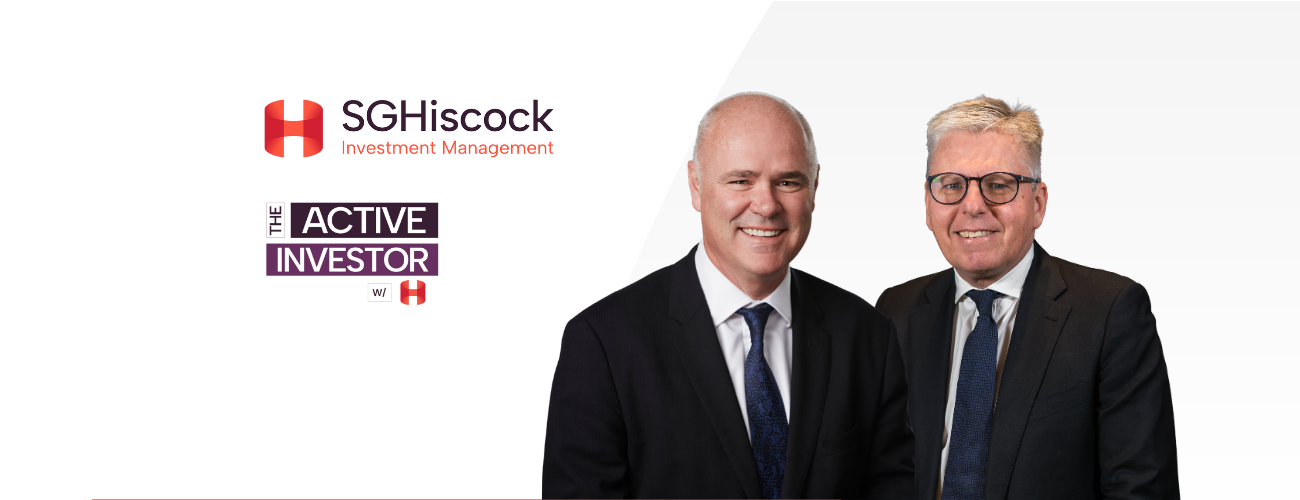
In episode #19 of The Active Investor with SGH – February 2026: AI, Stablecoins & Small Companies – In this episode of The Active Investor with SGH, Steve Hiscock and Hamish Tadgell, Head of Australian Equities, outline expectations for the upcoming reporting season. Despite heightened macroeconomic and geopolitical uncertainty, Hamish expects the season to be broadly resilient, supported by an improving domestic economic cycle following RBA rate cuts through 2025 and generally conservative corporate guidance.
More places to find our podcast:
February 2026: Pre-reporting season overview
Transcript
Steve Hiscock:
Welcome. My name is Stephen Hiscock, chairman of SG Hiscock. Today we have a special podcast, which is being recorded on Monday, the 2nd of February, 2026. Today we’ll be discussing the outlook for the reporting season, which is starting this week, and it’s my pleasure to be joined by Hamish Tadgell. Hamish’s portfolio manager and head of Australian Equities, and I believe Hamish, that this is your 60th reporting season, but let’s just clarify, there are two reporting seasons a year, so it’s not like he’s been around for 60 years, but he’s certainly been around a long time and we’re going to benefit from that experience today. We’re going to talk about what Hamish is expecting from the reporting season and it does seem to come round very quickly.
So welcome Hamish. Thank you for joining us ahead of what’s going to be a very busy time.
Hamish Tadgell:
Thanks Steve and great to be here.
Steve Hiscock:
Thank you. And so, let’s jump straight into it. At a high level, what are your expectations for this upcoming earning season?
Hamish Tadgell:
I think it’s very easy to get absorbed in the macro at the moment with all the geopolitical risks around the Trump administration’s realignment of economic trades in the sort of the world order. But, reporting season is a great time to focus back on the fundamentals for stocks and I think we’re also able to get a read through on how the portfolios are going. I think as we come into this reporting season overall, we’re expecting it to be pretty resilient and driven, by what we see as an improving cycle and pretty conservative in guidance overall out there.
Not a lot of companies have got guidance and those that do tend to be pretty conservative in this environment. The domestic economy as we see it has been showing signs of recovering, following the RBA rate cuts through 2025. And there is some risk clearly that momentum might fade a little bit if we were to see RBA increase rates in the next week.
But as we head into reporting season we think that there’s some reason for, positive surprise, particularly in the resources, and we’ll talk about that in a little bit further, but also I think, the industrial landscape has been pretty positive domestically. And we also expect that to be an area of strength.
Steve Hiscock:
Okay. And just a question on the comment you made about guidance. You said that not all companies give guidance and that’s standard, but are you seeing less companies give guidance?
Are they more conservative than they normally are?
Hamish Tadgell:
I think companies have been, for quite some time because of general disclosure continuous disclosure, I should say. We get regular updates, quarterlies, trading updates, and companies tend to look at consensus more than past and things like Visual Alpha, which is an improvement I guess in the consensus out there has certainly become more prevalent.
And I think that is meant that more companies are giving less specific quantitative guidance.
Steve Hiscock:
And that’s sensible. So just I guess we’re in a bit of an unusual setup at the moment, aren’t we? Coming into this reporting season, we could see the US fed cut rates over the next six months.
On the other hand, the reserve bank is likely to increase official rates either this month or pretty soon. So, what are your thoughts on how these two work together and how they will impact reporting season?
Hamish Tadgell:
Look, I think certainly there is some risk that we see a loss in momentum, just from a sentiment perspective, if rates were to increase. That said I should say, I say that basically because intuitively a tightening and financial conditions would typically be incrementally negative consumption and growth. But that said we’re conscious that the RBA decision is a really finely balanced call.
Certainly, market consensus at the moment is for 25 basis points increase in the next week. But there’s a couple of things I think to consider. Inflation, yes, is above the target, but when you drill down into the components the strength of inflation pulse is, I think is more questionable.
Real incomes and savings have been rising. But at the same time the economy remains quite bifurcated. And so I think if the RBA raises we see it much more as tapping on the brakes and helping extend the current cycle rather than causing an end to the current cycle. And so we’re still pretty constructive more broadly I just on the economic setup at the moment.
Steve Hiscock:
So, the way you see it, they’re not going to be too aggressive.
Hamish Tadgell:
Yes. Correct.
Steve Hiscock:
Okay. Let’s have a look at some of the key themes. What are some of the key themes you’re expecting over the reporting season?
Hamish Tadgell:
There’s probably three or four I would highlight. The first inflation has been an issue in particularly cost pressures in the economy and particularly rising wages, energy, and sort of input costs. So the question really is that agree to which companies are able to pass those on and preserve margins and question, particularly in sectors like the consumer where, you know, [00:05:00] the cost of living has been an issue. And will they need to drive more promotional activity through, or can they increase prices? And most companies post COVID have been able to increase prices to this point. But I think it is becoming slightly more challenging.
And we can maybe talk about that a bit more when we talk about the consumer in a moment. AI unquestionably will continue to be a focus around how companies are benefiting but also the threats to AI and their business. Another thing which perhaps is less obvious is that there’s been a huge number of CEO changes in the last six months.
We’ve seen a lot of CEOs retire and new ones coming in. So, the likes of Carsales, realestate.com, Treasury, Endeavour, Dominos, Rio, South32, BlueScope, and there’s a number of others, the list goes on a bit. And the question, what the market’s really interested in, I think is: one, these stocks are turnaround type stories, but secondly what those new CEOs are going to have to say about the strategy for those businesses. And the last point I’d probably make, I think just is in my time in markets, this sort of yield in the market is really been as low as I can remember. It’s the prevailing yield on the ASX 300 at the moment it’s about 3.2%, and that is low relative to history. And so, I think companies that are able to surprise on the capital management and the dividend side, I think will be well rewarded.
Steve Hiscock:
Okay. And just, sorry, just going back to the CEO thing, one of the things that does tend to happen is that they use their first reporting season to clear the decks, don’t they?
So there, might be some negatives from some of these companies.
Hamish Tadgell:
There will be, I think from some of them. There’s a couple where CEOs have actually been in the business and they’re replacing. So it’s been a logical succession. But that is always a risk that you get some reset.
And we saw Endeavour come out just a couple of weeks ago, really, with a bit of a reset and strategy. But we’ll get more details, I think when they announce their actual result.
Steve Hiscock:
Okay. One of the things that does happen pre the reporting season is you get warnings beforehand about upcoming results.
Have we seen many pre warnings this time? Are there expected to be earnings misses?
Hamish Tadgell:
Look, we have seen a few, mainly in the consumer space. So companies like Supercheap, JB Hi-Fi, ARB, Temple & Webster, all consumer names have come out and just highlighted that sales have been a bit softer.
But there’s also been some company specific issues I think around some of those. More broadly on the consumer, we’ve done some channel checks and got a fair bit of feedback on the sort of the retail trading through Cyber Week and Christmas in January. And I think it’s important to note that Christmas and the cyber has changed the traditional sort of patterns that we’ve maybe been used to. But overall, I think the consumer seems to be holding together reasonably well at the moment which is interesting. But, probably highlights the rate cuts that I spoke about earlier through 25.
The fact that real incomes are rising and that our savings levels have been increasing. They are in the national accounts, back in think it was October, November there’s a further $45 billion of savings that they found which I think just goes to the fact that discretionary income, this may be a little bit better than what people have been thinking.
So, I think that supports, perhaps that discretionary sector and maybe one of the opportunities that we’ll be certainly looking at through reporting season is consumer actually represented opportunity given the number of these stocks have been sold off on some of these trends over the last month or so.
Steve Hiscock:
Yeah. And there’s still quality stocks, right? There might be an opportunity. Let’s talk about some sectors. Are there any particular sectors that you expect will do well or sectors you expect won’t do that?
Hamish Tadgell:
Look, I mentioned resources at the outset. And if you look through since reporting of the AGM season, resources earnings have been upgraded by the market by about 15%, and that really reflects the strong commodity price environment we have been in.
A lot of it’s driven by market to market, but there are also some structural thematics that are really driving it in terms of supply chain resilience. Countries are looking to become national security protection around certain minerals. So we’ve seen that in rare earths in particular and even in lithium and the like.
And we also think that some of the themes around decarbonization and electrification are really helping sectors like copper, and clearly gold is being helped by the geopolitical environment. So that’s a sector which we think will do quite well. Domestic contractors and mining services companies, I think names like modern office, maybe Downer, Seven Group, should also continue to do well.
In terms of the risks, we are focused around the rate expectations and bond yields. And clearly if we were to see rates go up, that does perhaps put a bit of valuation and risk around the longer duration and some more interest rates sensitive stocks like the REITs.
But as I say, it’s something we’re watching, and I don’t think you can have a really strong view around that just at the moment. I think that might probably come clearer over the next month or two.
Steve Hiscock:
If it does happen, it has been relatively well telegraphed. So you spoke about resources being in upgrade mode and obviously being buoyed by geopolitical uncertainty, realignment of supply chains and so on.
On the flip side, as you mentioned, we’ve seen the AI trade the trade and artificial intelligence stocks come under some pressure bit of a de-rating and a sell off. As has been seen in many of the quality growth stocks in the market, do you see this as an opportunity coming into the reporting season?
What sort of thoughts do you have along that sort of line?
Hamish Tadgell:
Yeah, look, I think there’s going to be a fair bit of volatility around a number of these names, but you’re quite right to highlight that there has been really a wholesale derate of the technology sector, but that has also carried over into other quality growth companies in consumer discretionary healthcare. So the gaming stocks have really been derated, stocks like Aristocrat and Light and Wonder, Pro Medicus in the healthcare space. So these are stocks that clearly have been trading on a higher valuations on the expectation of that growth. And there’s just been this wholesale derate.
So that does, to our mind, create an opportunity. But I guess the question is where to look and I think actually Life 360 result, the other trading update the other day was really interesting in that stock popped 25% on better trading numbers. But, basically the following few days gave all that back. And so there’s this question around sentiment in the EAI space in particular, which I think is going to continue to weigh on the space. There’s this question about, whether AI companies and technology companies are spending too much in this space and whether they’re going to get the returns.
Particularly for the unprofitable ones, whether they’re going to be able to generate sufficient free cash flow in a timely manner to, get to earnings, break even, et cetera. I think that, we think there are some opportunities. We’re much more focused around those companies that are continuing to grow, which are trading on more attractive valuations.
We’ve been through this before in a number of sectors. So if you think back to digital classifieds, if you think back to online retailing when Amazon came in you think back to more recently GLP one drugs, the obesity drugs, and the impact that’s had on companies like ResMed.
It can take a number of quarters for or even longer than that for the market to get comfortable with the trends. And I think this is very early day for the technology stock, so we’re probably not a buyer of many of those top technology names that have been derated and more looking to focus on, as I said before, some of the names that have been more reasonable multiples where there’s still strong growth.
Steve Hiscock:
Thanks, Hamish. Are there any sectors or names in particular that are starting to stand out that you prefer, that you think are better positioned in this environment?
Hamish Tadgell:
Yeah, so talking to those names that you’re trading on, which we think are reasonable valuations and still got some very strong growth characteristics, good competitive positions, companies like ResMed, Aristocrat, and Light and Wonder are names which we particularly like at the moment and clearly watching their results. ResMed had its result last Friday and really a very good second quarter trading update.
We also think that the classified businesses look reasonably well positioned. Carsales, Seek, and realestate.com have all been derated, probably 20% plus. We think these businesses really benefit from stronger consumer franchises. A high level of organic growth traffic still, and really their vertical specialisation and industry leadership, in our view, put them in still very strong positions, which are unlikely to be as impacted by AI. Seek’s probably our preferred name at the moment in that space. And again, a name which we hope through reporting season, you should see good volume growth alongside improving yield improvement, which hopefully you’ll see that rerate.
Steve Hiscock:
So, there’s a couple of stocks that sound interesting and it does make sense. You do wonder, some of these stocks that might have been sold off, surely, they can actually benefit, for example, Seek and so on the classified side, surely, they can benefit from AI as well, make it faster, cheaper to integrate things.
Hamish Tadgell:
Yeah, certainly they’re using that in terms of cost savings and Seek came out and announced how it’s using that in terms of better and analyzing its traffic and allowing it, that to then feed into how it dynamically prices for different types of ads, and Carsales and Real Estate have highlighted similar types of trends. It’s not all negative. There’s certainly some positive trends here too.
Steve Hiscock:
Alright, terrific. So, look, there’s plenty going on at a company level, but there’s also a lot going on at a macro level. As an overall observation. How do you see the market in the upcoming months?
Hamish Tadgell:
We continue to be reasonably positive.
There are some risks clearly as we’ve highlighted but we continue to think that, there is an opportunity for equity markets to broaden out. Particularly if we start to see the fiscal stimulus and some of the monetary. And we’ve discussed the monetary, how there’s a bit of a yin and yang going on between the US and Australia at the moment.
But more broadly governments are continuing to invest from a fiscal perspective, and that remains pretty constructive and I think particularly in the US ahead of the midterm US elections that is going to continue to be a theme. And I think the wild card is always, what’s going on with Mr. Trump. And what’s going on with inflation and what we have seen is underlying inflation is still high, but it is moderating. We’ve also seen with the tariffs, perhaps, some retreat from that maximalist sort of terrorist proposition that was announced in April. So, I think if we put all that together we remain still constructive, cautious, but constructive would be the way that I would describe it.
Steve Hiscock:
Right.
Okay, that’s great Hamish. Conscious we’re taking up a lot of your time ahead of a busy reporting season. Thank you so much for sharing your views. Good luck through reporting season. Hopefully the stocks that you are long go very well and we look forward to catching up at the end of it and having a bit of a debrief if you’re around, that’d be great.
Hamish Tadgell:
Look forward to that, Steve, and thanks, been great to talk.
Steve Hiscock:
Thanks Hamish. We hope you enjoyed today’s episode. Please subscribe so you don’t miss out on future podcasts and follow us on LinkedIn, YouTube, Spotify, and Apple, or wherever you get your podcast from. Please do let us know if you have any questions or comments. And until next time, stay informed and stay active.
Please subscribe so you don’t miss out on future podcasts. Follow us on LinkedIn, YouTube, Spotify, Apple, or wherever you get your podcasts from. And please do let us know if you’ve got any questions or comments.
Until next time, stay informed and stay active.
This podcast is produced by SG Hiscock and Company. It does not constitute financial advice and assumes a certain level of knowledge. It is general information only and does not take into account the investment objectives, financial situation, or needs of any person, and should not be considered a recommendation.
Follow us on LinkedIn, YouTube, Spotify, Apple, or wherever you get your podcasts from.
Please let us know if you have any questions or comments. Until next time, stay informed and stay active.
___
Disclaimer:
This podcast is produced by SG Hiscock and Company. It does not constitute financial advice and assumes a certain level of knowledge. It’s general information only and does not take into account the investment objectives, financial situation, or needs of any person and should not be considered a recommendation. For more information, visit: https://sghiscock.com.au/podcast-disclosures-and-disclaimers/.

SG Hiscock & Company, trading as SGHiscock Investment Management (SGHiscock) has prepared this article for general information purposes only. It does not contain investment recommendations nor provide investment advice. Neither SGHiscock nor its related entities, directors or officers guarantee the performance of the Funds. SGHiscock also doesn’t guarantee the repayment of capital or income invested in the Funds. Past performance is not necessarily indicative of future performance. Professional investment advice can help you determine your risk tolerance as well as your need to attain a particular return on your investment. We strongly encourage you to obtain detailed professional advice. We recommend that you read the relevant Product Disclosure Statement and Target Market Determination, if appropriate, in full before making an investment decision. SGHiscock publishes information on this platform that is, to the best of its knowledge, current at the time of publication. It is not liable for any direct or indirect losses attributable to omissions, outdated, inaccurate, incomplete or deficient information. Investors and their advisers should make their own enquiries before making investment decisions.
Stay in the loop
Get the latest insights and company news direct to your inbox.