
ICE Fund update – Q1 2025
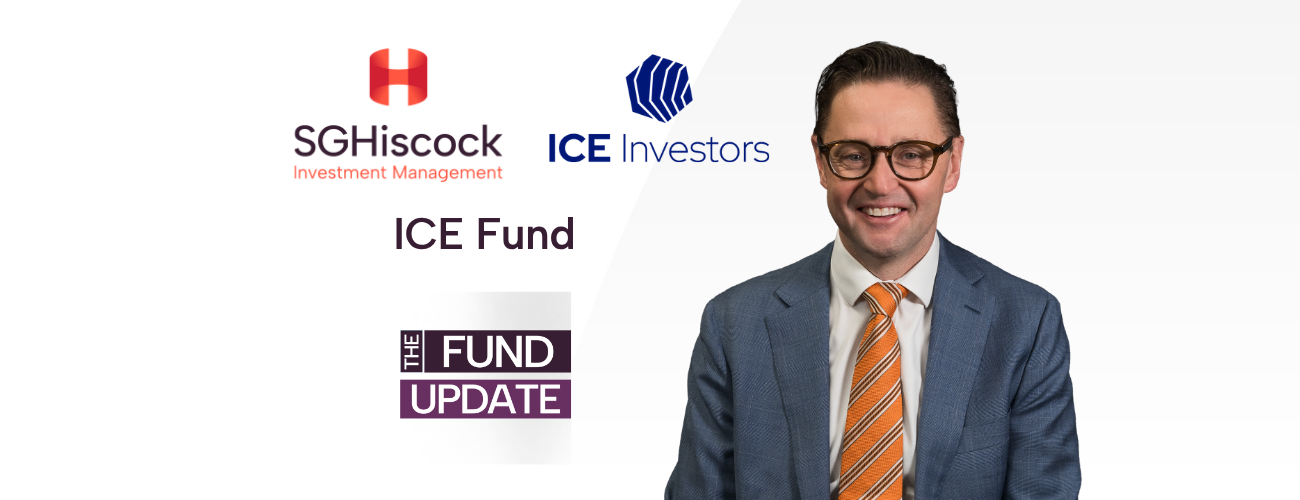
In this ICE Fund update, Roger Walling covers Q1 2025 performance, major portfolio contributors, and the franchise-driven strategy behind the ICE Fund.
ICE Fund update: Navigating volatility in Q1 2025
In this ICE Fund update, Roger Walling, Portfolio Manager of the ICE Fund, reflects on the fund’s March 2025 quarter performance and evolving market conditions. He highlights key contributors such as Generation Development Group, Temple & Webster, and Equity Trustees, discusses recent additions like Port of Tauranga, and outlines the ongoing focus on identifying high-quality franchise businesses with pricing power, sticky customers, and long-term growth potential.
Transcript
March quarter performance and market context
After a very strong 2024 calendar year for the ICE Fund, the March quarter saw a return of minus 6.64% for the fund, and now rolling year. The return stands at minus 0.91% net of fees. It’s fair to say that the February reporting season in Australia and the March quarter were held against a real evolving geopolitical backdrop – this increased volatility in the market and across our portfolio.
For the rolling one-year period, highlighting that we are benchmark unaware, the ASX Small Industrials Accumulation Index returned minus 3.83%, and the Australian ASX Small Ordinary Accumulation Index returned minus 1.2%.
Key contributors: GDG, Temple & Webster, Equity Trustees
Key contributors to the portfolio were GDG – Generation Development Group, which has the leading position in the sale and manufacture of investment bonds in Australia. They also have a very strong position via its Lonsec business in the implemented consulting business. Two things happened during the quarter. Firstly, Generation Development recorded strong results and very strong profit growth across both key businesses, Lonsec and the investment bonds business. Secondly, the highly strategic acquisition of Evidentia Group, in effect, brings together the number one and number two players in implemented consulting. That will bring scale, and with scale, they’ll entrench their market position in that industry subsegment. So, this is a very positive development for GDG.
Secondly was Temple and Webster. This is a category killer in furniture and homewares. They reported revenue growth for the half-year period of 24% and off a low base, 118% growth in profit. They continue to entrench themselves as the dominant player in furniture and homewares in the online segment, and they recorded increases in customer number, increases in customer conversion, and increases in average order value. So, that business is flying and is the dominant category killer in online furniture and homewares.
A third key contributor was Equity Trustees or EQT. Again, EQT-owned financial services infrastructure in Australia, through their RE or responsible entity services, corporate and super trustee services, continues to win clients and gain shares. Customers in this market segment are very sticky. It is the backbone of many financial service operators and licenses in Australia. EQT continues to demonstrate strong growth in customers and revenue; their results are well received by the market, and they are a strong contributor to the fund.
Celebrating 20 years: A consistent franchise-focused strategy
The fund entered its 20th year, starting in February 2006. As always, the fund operates and seeks investments in the small-cap industrial segment of the market. What do we call a franchise? A franchise is a business with a moat. It has assets that are difficult to replicate, and where we find the customers are sticky. We look for those attributes and a financial return that provides the right risk reward for our customers.
We have a seven-year view of valuation, and I’d impress upon our investors how we’ve continuously applied the same discipline across that 20-year timeframe.
Franchise investments in action: Paragon, Hansen, AUB Group
Some examples of franchises within the fund – Paragon Healthcare, a business we added to the portfolio last year and healthcare infrastructure – they distribute medicines to doctors, hospitals, and pharmacies. They continue to gain share in their categories and offer that low-cost service to customers. That know-how enables them to continue to gain, share, and build that moat around their business.
Hansen Technologies provides mission-critical software for energy, water, and telcos. And just thinking about those energy companies, the billing systems that they provide have become a lot more complex. They need to capture solar and battery contributions and understand different tariffs, such as EV charging. So that’s making their customers, who are already really sticky, even more sticky and reliant on Hansen.
The AUB Group is an insurance broker and network of businesses surrounding those insurance brokers. We find that customers in SME mid-market businesses are really sticky with their insurance brokers. There’s an asymmetry of knowledge; they rely on their insurance brokers to provide services, including premiums and claims. And so we’ve experienced over time how sticky customers are to their insurance broker, which builds the foundations of a really strong business.
New addition: Port of Tauranga – a unique asset with pricing power
We’ve built a position in New Zealand and listed the Port of Tauranga during the quarter. The Port of Tauranga is a unique asset. It’s a deepwater port, and its physical infrastructure is very challenging to replicate. The Port of Tauranga captures one-third of all the imports and exports that move through New Zealand. It’s located close to Auckland, the key city in New Zealand. Auckland’s customers are very sticky, whether it is agricultural products or imports of more consumer goods.
Critically, pricing power is being exercised in New Zealand. So, the Port of Auckland has begun lifting prices because it is simply running out of space for its port. The Port of Tauranga is following that, and that pricing power will drive increases in profit growth for what is a fantastic asset in New Zealand – an asset that is impossible to replicate.
Key portfolio change: Exit from Redox Limited
The key stock sale during the period was Redox Limited, with their February profit results invalidating our view of the franchise. Firstly, we saw a lift in corporate costs, but secondly, we saw increasing price competition for the importation of chemicals. We had overestimated their ability to resist any price pressure, so our view of the franchise was invalidated, and we sold.
Looking forward: Why franchise investing matters in dislocated markets
So why should investors invest in the ICE Fund now? As highlighted earlier, changes that are happening globally are indeed creating a period of dislocation in markets over time. We’ve observed that dislocation in markets provides an opportunity for franchise investments to differentiate themselves. Businesses with a moat, pricing power, sticky customers, and less economically sensitive companies should ultimately deliver better profit growth and more consistent returns for their investors.
That’s what we look for in the ICE Fund and the franchise investments we seek. Perhaps we can turn the clock back to five years ago to March 2020 and the depths of uncertainty concerning COVID-19. When we look back at the five-year returns for the fund, they are a very pleasing 13% per annum since March 2020, a period we would probably rather not revisit. But it highlights the strength of the franchise investments, the strength of the process, and the opportunity we see in markets today.
*The text has been edited for clarity.
For more information about the fund, click HERE.
Disclaimer
The document contains general information only. Reference to either individual securities or other investments should not be considered as investment advice. We strongly encourage you to obtain professional advice before making an investment in securities that have been mentioned. Documents you should consider prior to making an investment could include the relevant Product Disclosure Statement and the accompanying Target Market Determination. If you would like further information on financial products that SG Hiscock & Company Ltd (AFSL 240679) is the investment manager for, contact the Client Services team on 1300 133 451, visit the website sghiscock.com.au or contact your financial adviser. Any investment is subject to risk, including possible loss of income or capital invested.

SG Hiscock & Company, trading as SGHiscock Investment Management (SGHiscock) has prepared this article for general information purposes only. It does not contain investment recommendations nor provide investment advice. Neither SGHiscock nor its related entities, directors or officers guarantee the performance of the Funds. SGHiscock also doesn’t guarantee the repayment of capital or income invested in the Funds. Past performance is not necessarily indicative of future performance. Professional investment advice can help you determine your risk tolerance as well as your need to attain a particular return on your investment. We strongly encourage you to obtain detailed professional advice. We recommend that you read the relevant Product Disclosure Statement and Target Market Determination, if appropriate, in full before making an investment decision. SGHiscock publishes information on this platform that is, to the best of its knowledge, current at the time of publication. It is not liable for any direct or indirect losses attributable to omissions, outdated, inaccurate, incomplete or deficient information. Investors and their advisers should make their own enquiries before making investment decisions.
Stay in the loop
Get the latest insights and company news direct to your inbox.