
SGH Opportunities Fund update – Q2 2025
The SGH Opportunities Fund outperformed in Q2 2025, delivering a 16.5% return after fees. Rory Hunter and Sophie Smith discuss the standout names and what they’re watching next.
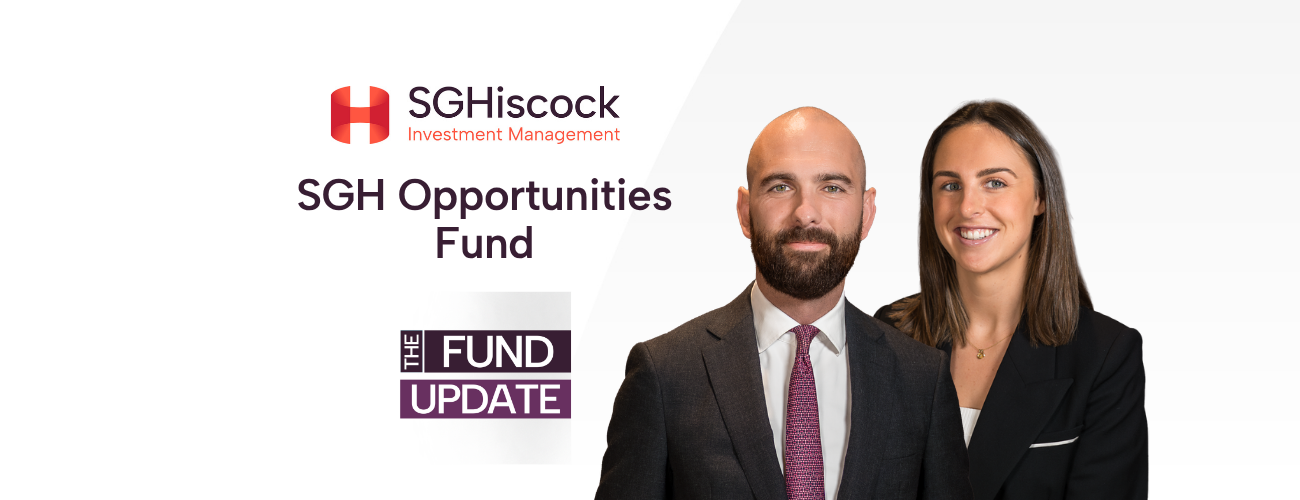
SGH Opportunities Fund update: Strategic positioning in metals, telco, and microcaps drives benchmark-beating performance.
The SGH Opportunities Fund delivered a standout performance in Q2 2025, returning 16.5% after fees and outperforming its benchmark by nearly 8%. In this quarterly update, Portfolio Manager Rory Hunter and Assistant Portfolio Manager Sophie Smith break down the key drivers, including strength in strategic metals, Superloop’s organic growth, and high-conviction picks in the healthcare and telecommunications sectors. They also share insights into portfolio positioning, microcap momentum, and what the current cycle means for investors.
Watch/Listen to the Q2 2025 SGH Opportunities Fund update ⏬:
Transcript:
Rory Hunter:
Welcome back to the SGH Opportunities Fund quarterly update. I’m Rory Hunter, and with me today is Sophie Smith. Sophie, how are you?
Sophie Smith:
It’s great to be here for another quarterly update. There’s plenty to discuss, especially now that the quarter is behind us and we have some strong portfolio numbers to report.
Rory Hunter:
That’s right. So, let’s start there. The fund delivered a 16.5% return after fees for the June quarter, which was almost 8% ahead of the benchmark. Notably, that brings our FY25 year return to 34.6%, which represents a very strong outperformance of 22.4% for the year.
Sophie Smith:
Yes, that was a huge year, driven by several key factors: gold exposure, strength to selected growth names, and a significant return from strategic metals exposure as well.
Rory Hunter:
Let’s talk markets first. The ASX 200 was up 1.4% in June, while small caps slightly lagged. The ASX Small Ordinaries Index returned just under 1% for the month of June. That underperformance was largely due to a sharp pullback in gold stocks, with the gold index down 9% for the month. So, gold taking a bit of a breather there.
Sophie Smith:
It’s important to highlight that gold is just one part of the resource picture. Our exposure to copper and strategic metals more than offset the weakness that we saw in gold, and that was a key driver of performance this quarter as well.
Rory Hunter:
That’s right, Sophie. We’re still overweight resources overall, but we’ve been reducing that position throughout Q4 and into early Q1 as well. We are managing risks there, but we’re still backing long-term demand, especially in defence-aligned metals. And so, talking about tungsten and copper in particular as well.
Sophie Smith:
Let’s delve into that a bit more. So, Almonty Industries continues to deliver on the tungsten story, right?
Rory Hunter:
Absolutely. It was a huge quarter for Almonty. A few things happened there. So, the US Congress formally recognised Almonty’s flagship asset, which is the Sangdong mine, as a globally strategic asset. They’re also added to the S&P/TSX Global Mining Index, which significantly boosts their visibility to global investors.
Sophie Smith:
And of course, that sits right in the crosshairs of the global defence rearmament cycle. The media has widely reported that NATO countries are committing to spending 5% of their GDP on defence by 2035.
Rory Hunter:
Yes, we think that could be a significant driver and tailwind for copper over the medium to long term. We estimate that alone, it could add about 400,000 to 800,000 tons of copper demand per year. With supply structurally constrained, it’s a huge tailwind to the sort of supply-demand dynamic, and as a result, pricing. We are long-term holders of Almonty Industries, and it remains one of the best strategic exposures on the ASX right now. This is particularly due to its strategic metals exposure, rather than just copper in particular.
Sophie Smith:
Great. And now, let’s take a look at our telco exposures, particularly Superloop.
Rory Hunter:
Superloop was one of the strongest performers, up 43% for the quarter. They upgraded FY25 during the quarter, which was among other positive developments. It’s also worth noting that this has been one of the standout names in the portfolio through FY25.
Sophie Smith:
Right. It has reached a record high in terms of share price, and the strength is more broadly based. Their consumer, wholesale, and business segments were all strong performers.
Rory Hunter:
Yes, that’s right, Sophie. Importantly, that growth has all been organic, and we’re starting to see some really strong operating leverage come through in the company.
Sophie Smith:
Now, let’s pivot to healthcare. The sector was, once again, a laggard for the June quarter, with the ASX 300 Healthcare Index underperforming all other major industrial sub-sectors.
Rory Hunter:
Yes, it has been a really weak performer. But we’re actually increasing our exposure there. We’re taking a somewhat contrarian view on it, and it has started to identify some high-quality names trading at quite attractive discounts.
Sophie Smith:
Now, let’s discuss portfolio positioning. We’ve also already mentioned resources, but how are we thinking about the consumer sector?
Rory Hunter:
We’ve been underweight in the consumer sector for quite some time. However, we are actively reassessing this, with more rate cuts expected, which could lead to a slight improvement in sentiment. We believe we are already seeing this.
The issue we see is that valuations are elevated, so we’re carefully watching earnings momentum across some of the more quality names in the consumer sector to see if that earnings momentum can justify the valuations the market’s paying.
Sophie Smith:
To unpack that a bit more, it’s a more selective approach rather than a wholesale shift.
Rory Hunter:
Yes, that’s exactly right, Sophie. Therefore, we seek exposure to rate-sensitive upside, but not at the expense of our valuation discipline. Let’s touch on a few more names quickly. SRG Global was up 14.6% for the quarter on the back of $850 million in new contract wins. This is all organic, with repeat blue-chip clients such as BHP and Origin.
Sophie Smith:
Yes, that was a great announcement. These types of contracts give us a great deal of confidence in the company’s long-term revenue visibility, which is always important.
Rory Hunter:
Yes. Looking at another exposure, we saw Develop Global raise $180 million to fund several of its Coppers Inc. Projects. It was done at a sensible but skinny discount, and we think the timing makes much sense, given our view on the medium-term copper deficit as well.
Sophie Smith:
And what about Singular Health? That’s another one that flew under the radar a bit and sits in the unloved healthcare sector.
Rory Hunter:
They secured an initial $1.3 million pilot contract in the US and subsequently raised $8 million to expand their operations. The 3DICOM imaging platform solves a real problem in US healthcare, and importantly, it’s already FDA cleared. With gross margins near or even above 90%, this is a really high-quality SaaS exposure in a sector that needs the innovation they’re providing.
Sophie Smith:
Before we wrap up, what’s your read on microcaps from here?
Rory Hunter:
Yes, good question, Sophie. Historically, when interest rates start to fall, microcaps start to outperform. So, especially when looking at those names outside the ASX 300, we are now seeing a bit of a pickup in capital markets activity at the smaller end of the market, which is often a good leading indicator of valuation catch-up in those micro-cap names versus their small-cap counterparts.
Sophie Smith:
Fantastic. So, now could be a good time for investors to look further down the market cap spectrum.
Rory Hunter:
Yes, that’s right. It’s often in the early stages of a rate cut cycle that we start to see microcaps provide some decent alpha. And we’re entering that window now. It could provide a decent tailwind for the next couple of years.
Sophie Smith:
After an impressive quarter, some strong performance, and lots of moving parts. Thanks for running through it all, Rory.
Rory Hunter:
Thank you, Sophie. We’ll be back next quarter with more updates from the portfolio and an overview of what we’re watching in the markets. Thank you for tuning in to the SGH Opportunities Fund quarterly update.
*The text has been edited for clarity.
For more information about the SGH Opportunities Fund, click HERE. Follow us on LinkedIn.
Disclaimer
This fund update has been prepared by SG Hiscock & Company (SGH) to provide general information only and is not intended to take the place of professional advice. It does not take into account the investment objectives, financial situation or particular needs of any particular person.
Equity Trustees is the responsible entity for the SGH Opportunities Fund. Neither SGH, Equity Trustees nor any of its related parties provide any warranty of accuracy. Past performance should not be taken as an indicator of future performance. You should obtain a copy of the Product Disclosure Statement before making a decision about whether to invest in this product. Follow the link for the full disclaimer: https://sghiscock.com.au/podcast-disclosures-and-disclaimers/.

SG Hiscock & Company, trading as SGHiscock Investment Management (SGHiscock) has prepared this article for general information purposes only. It does not contain investment recommendations nor provide investment advice. Neither SGHiscock nor its related entities, directors or officers guarantee the performance of the Funds. SGHiscock also doesn’t guarantee the repayment of capital or income invested in the Funds. Past performance is not necessarily indicative of future performance. Professional investment advice can help you determine your risk tolerance as well as your need to attain a particular return on your investment. We strongly encourage you to obtain detailed professional advice. We recommend that you read the relevant Product Disclosure Statement and Target Market Determination, if appropriate, in full before making an investment decision. SGHiscock publishes information on this platform that is, to the best of its knowledge, current at the time of publication. It is not liable for any direct or indirect losses attributable to omissions, outdated, inaccurate, incomplete or deficient information. Investors and their advisers should make their own enquiries before making investment decisions.
Stay in the loop
Get the latest insights and company news direct to your inbox.