
SGH Opportunities Fund update – September Quarter 2026
In this SGH Opportunities Fund quarterly update, Rory Hunter and Sophie Smith discuss shifting market conditions, company earnings and emerging investment opportunities. They explore key developments across holdings including Codan, Viridis, Koala and Synertec, and explain how a disciplined, company-focused approach is helping identify opportunities amid market volatility.
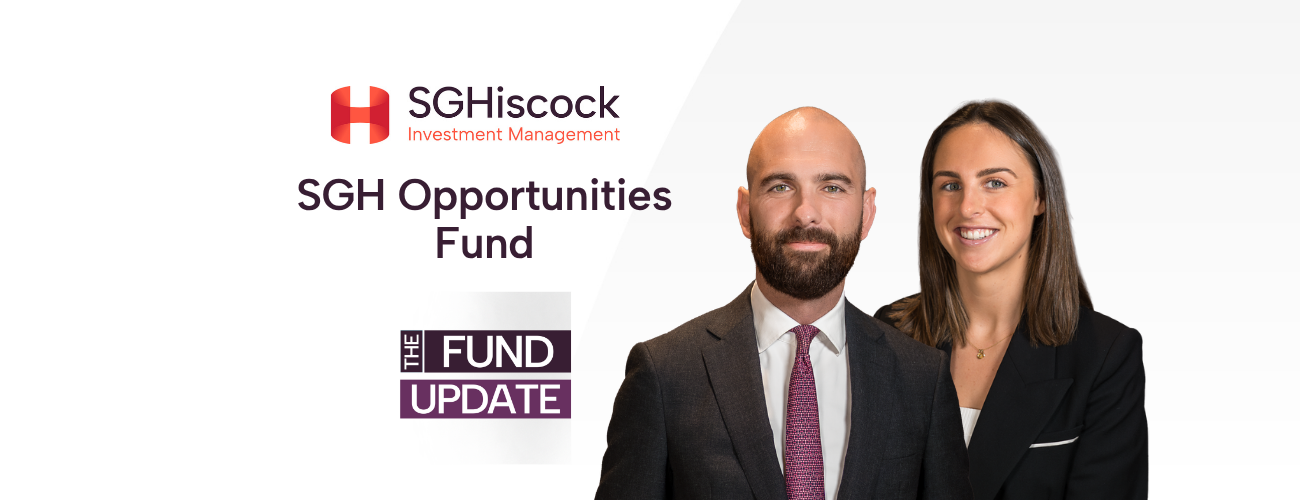
SGH Opportunities Fund update: September Quarter 2026
In this SGH Opportunities Fund quarterly update, Rory Hunter and Sophie Smith discuss shifting market conditions, company earnings and emerging investment opportunities. They explore key developments across holdings including Codan, Viridis, Koala and Synertec, and explain how a disciplined, company-focused approach is helping identify opportunities amid market volatility.
Watch/Listen to the September Quarter 2026 SGH Opportunities Fund update ⏬:
Transcript:
SGH Opportunities Fund performance for the quarter
Rory Hunter: Welcome back to the SGH Opportunities Fund quarterly update. I’m Rory Hunter, and with me is Sophie Smith. Soph, good to have you.
Sophie Smith: Hey, Rory. It was a pretty volatile quarter, maybe not in the final headline return, but certainly in terms of market leadership and the macro backdrop.
Rory Hunter: Yeah, that’s right, Soph. I think the defining feature was how quickly that market narrative changed.
Early in the quarter, sentiment weakened toward AI infrastructure and data centre spending. Investors increasingly focused on the scale of hyperscaler capital expenditure, pressure on free cash flow, and how long those investments might take to generate adequate returns. That weighed on several Australian contractors and infrastructure names.
Then, in August, we saw a sharp reversal led by resources, particularly gold, before September shifted again as global bond yields moved materially higher.
Sophie Smith: Yeah, and so by the end of September, rates had really become the dominant macro story. In the US, the 10-year Treasury yield rose to around 5.3%, its highest level since 2007, while the 30-year moved above 5.6%.
So then we also saw long-dated yields move materially higher across the UK, Europe, and Australia, so it was very much a global repricing of the cost of capital rather than just an isolated move in the US.
Rory Hunter: Yeah, that’s right, Soph. So the Fed also raised rates for the first time since 2023.
Domestically, the RBA lifted the cash rate to 4.6%. Still, the market read the decision as relatively dovish given softer inflation data and signs that higher rates are starting to weigh on housing and activity. We think the cash rate is probably at or near its peak, but with inflation still above target, an extended period on hold is more likely than any near-term easing.
Sophie Smith: Gold was a pretty good reflection of those changing macro narratives as well. It rallied strongly through August as concerns about US fiscal sustainability and currency debasement returned, but then fell almost 6% in September as real yields moved higher.
Rory Hunter: Yeah, that’s right. So the quarter was a really nice reminder of how quickly macro leadership can rotate.
For us, that reinforces the importance of not making the portfolio dependent on one top-down view.
Key drivers of performance
Sophie Smith: So it feels like a while ago now, but reporting season gave us some useful confirmation at the company level too. So one of the stronger themes was the contractor exposure. So names like SRG Global and Lycopodium delivered forward outlooks ahead of market expectations, and that really reinforced the underlying infrastructure and resources investment cycle, and that remains strong despite some of the sentiment-driven weakness we did see earlier in the quarter.
Rory Hunter: Yeah, very much that CapEx cycle just continues and looks very sustainable at this stage. SRG finished the year with 5.1 billion of work in hand, up 42%, while Lycopodium guided FY27 earnings materially ahead of prior expectations. So those contractors are just continuing to look very strong.
The common message was that work availability, i.e., demand, isn’t the constraint at the moment; it’s execution capacity. That gave us greater confidence that some of the weakness we saw earlier in the quarter was more about the market positioning in contractors rather than a deterioration in those fundamentals.
Sophie Smith: Yeah, and in the recent month, Codan was probably the standout individual company update we’ve seen for the year. The scale of the earnings upgrade was really quite extraordinary.
Rory Hunter: Yeah, Soph, I don’t think we’ve seen an upgrade quite like that for some time, in fact, in recent memory. So Codan upgraded its ’27 communications growth target to 30 to 40% from 20% and guided to first-half group NPAT of at least 160 million.
Now, to put that in context, the company earned around 175 million in NPAT across the whole of the previous year in FY26. Communications, or the communications segment, is driving that step change, with first-half revenue expected to be above 400 million and margins around 40%. Worth noting that management previously guided margins to a ceiling of 30%, so this is a big uplift.
Demand for communications technology used in unmanned systems has accelerated significantly, and the rest of the communications business is still growing strongly. And Minelab, which is the metal detection business, is also performing very well.
Sophie Smith: And I think it’s important to discuss that you’ve taken some profits after that move, though.
Rory Hunter: Yeah, we have. We broke the update down, and, as management made very clear, a large part of the near-term earnings upgrade was driven by conflict-related demand in communications. Visibility on those orders is still relatively short, only about three months, and the stock has re-rated very materially.
So it made sense to manage that position and take some money off the table given the uncertainty around earnings visibility. However, we still haven’t exited the position. We think there’s still scope for further upgrades slightly further out if European defence funding continues to convert into orders, particularly because Codan’s guidance assumes a meaningful slowdown in the second half.
Sophie Smith: And I think that’s a really important distinction you just made there. You can acknowledge that the current earnings strength is being helped by conflict-related demand and that short order visibility you just mentioned. However, we’re still recognising that the funding backdrop suggests there’s probably more to come down the track.
Rory Hunter: Yeah, I think that’s the right way to look at it. So if management are inherently conservative, and really that guidance is reflecting a lack of visibility as opposed to a lack of demand. So we still like the business. We’re just being disciplined with position sizing after such a strong move, and we’re also recognising this isn’t an emerging company.
It’s an ASX 100 company with a $12 billion market cap.
Sophie Smith: And now shifting to a resources name that became more interesting throughout the quarter, that was Viridis. So for people who don’t know the business, Viridis Mining and Minerals owns the Colossus rare earth project in Brazil. It’s an ionic clay deposit, which matters because rare earths are relatively loosely bound to the clay and can be extracted through a much simpler process than many hard-rock projects.
So that helps keep operating costs relatively low, and these deposits can also contain higher proportions of the more valuable heavy rare earths.
Rory Hunter: Yeah, that’s a very important part of the Viridis story, Soph. The company completed its definitive feasibility study during the quarter, in August, outlining a 25-year operation producing around 3,000 tons a year of magnet rare earth.
The really important development, though, came just after the quarter end when Lynas announced that it would acquire Meteoric Resources, which owns a neighbouring Caldeira project to Viridis. It’s right on that tenement boundary.
Sophie Smith: And I think the important part of that is that it effectively gives the market a real transaction value for a comparable project in the same district, right?
Rory Hunter: Yeah, that’s a key point. It just gives us a look-through potential valuation for Viridis. So Lynas is paying about .7 times the NPV of Meteoric’s project, whereas Viridis had been trading at roughly a quarter of its NPV. You obviously can’t just apply the takeover multiple directly.
Viridis is still pre-production, and execution risks remain. But the size of the valuation gap is notable, and it really does need to close.
Sophie Smith: And Viridis also compares really favourably on the underlying project economics?
Rory Hunter: Yeah, it does. So Viridis has lower forecast operating costs and a richer product mix than the neighbouring project.
The product is expected to contain a high proportion of NdPr, as well as more DyTb, the higher-value heavy rare earths used in permanent magnets. With Meteoric now acquired, Viridis becomes one of the few remaining independent advanced ionic clay rare earth deposits in the district and globally.
So we think the transaction materially improves the strategic read-through for Viridis’ Colossus project.
Sophie Smith: So on a completely different note, Koala was another idea that stood out this month. It’s best known as a sofa-in-a-box business, but it’s increasingly becoming an international direct-to-consumer furniture platform.
The company designs its products in-house, outsources manufacturing and delivery, and deliberately keeps its product range fairly narrow. In its first year as a listed company, it posted a strong result, with revenue up 20% to 332 million and EBITDA more than doubling to around 28 million.
And importantly, around half of revenue now comes from offshore markets.
Rory Hunter: Yeah, that’s right, and there are a few things we really like about it, Soph. So first of all, it’s a very capital-light business. So CapEx was less than $2 million last year on more than 330 million of revenue. Cash conversion was over 100% of EBITDA, and the company has a strong net cash position of over $70 million.
Second, international growth is becoming very meaningful. The US now accounts for more than 20% of total revenue and grew almost 60% last year, while the business more broadly entered the new financial year with very strong order growth. Third, despite that growth, it still trades at a discount to several comparable consumer businesses on our numbers.
So it trades at about 11 times FY27 EV-EBIT versus a peer group at 14 times FY27 EV-EBIT, despite showing stronger growth and a more capital light business model.
Sophie Smith: And unlike a lot of other businesses we’ve previously looked at in the sector, this business seems to have a pretty disciplined approach in how it expands internationally.
So the UK launch, for example, required very little upfront investment and became contribution positive relatively quickly.
Rory Hunter: Yeah. That’s right. So that’s been incredibly encouraging. So Koala is a founder-led business, and we like the way that the management incentives are actually structured. So last year the bonus framework rewarded EBITDA, so operating profitability rather than just revenue growth, which is important because our investment case really relies on the business maintaining discipline around margins as the business continues to scale its international footprint.
Sophie Smith: And that margin is probably the main thing we’re watching for from here. So the second half gross margin was very strong, but management acknowledged that there were some benefits from freight and currency. In the US, contribution margin is still lower because the company is deliberately investing more heavily in marketing.
But as the business scales, we think that it becomes quite exciting.
Rory Hunter: Yeah. So that’s really the key test for us at this stage or in the near term. So we want to see whether the current margin profile can be sustained as international revenue becomes a larger part of the business. We started with a relatively small position, and we’ll look for confirmation in the next result.
Current fund positioning
Sophie Smith: Sounds good. And so through the quarter, we also established a position in Synertec. So it’s a Melbourne-based engineering business specialising in automation and control systems for critical infrastructure. The story seems to be shifting quickly from turnaround to growth.
Rory Hunter: Yeah. That’s right.
So we’ve had a position in Synertec in the Emerging Companies Fund for quite some time, and we’ve just established a position in the Opportunities Fund on the back of some quite significant development. What attracted us? First, in September, the company won a $45.5 million engineering contract for ANSTO, which supported a material upgrade to FY27 revenue guidance. One thing we found particularly interesting was that, despite the size of that contract, it added only around $9 million to the reported $174 million engineering pipeline.
Sophie Smith: Based on that, most of that opportunity had already been captured on the probability-weighted basis that the company provides the market.
Rory Hunter: Yeah, that’s correct. And that gives us more confidence that the pipeline is actually credible or a credible guide to potential future conversion, rather than simply a list of very early-stage opportunities.
But the larger opportunity, in our view, is their Powerhouse business, and that’s a proprietary battery energy platform.
Sophie Smith: And that’s really about using battery storage and intelligent controls to improve the efficiency and reliability of industrial power systems.
Rory Hunter: Yeah, that’s right. The product’s now moved into commercial development.
Powerhouse has 14 units contracted and generated about $2.5 million in recurring revenue in FY26. During the quarter, Santos also selected Powerhouse for its Moomba Central Optimisation Project. So that’s basically a 12-megawatt, 12-megawatt-hour system, which is significantly larger than the units Synertec has previously supplied to Santos.
Sophie Smith: And that also follows Amplitude Energy selecting the tech for a similar application in Orbost. So you’re starting to get evidence that this could become a repeatable product rather than a one-off engineering solution.
Rory Hunter: Yeah, okay. So that’s what makes it interesting from a sort of business fundamentals perspective.
There are obvious applications across oil and gas, mining, and potentially data centres, essentially anywhere you have generator-dominated power systems where reliability is absolutely critical. Synertec also has a strategic collaboration with Hitachi Energy, which gives the business access to leading technology and adds credibility when bidding for larger projects.
And the reported Powerhouse pipeline is close to $400 million across expressions of interest and tenders. We believe the market is currently assigning relatively little value to that part of the business. With the cost base already reset, large contract wins can also generate meaningful operating leverage.
Reasons to invest in the fund
Sophie Smith: So now to step back and tie it all together, it was a quarter where the macro environment moved around quite dramatically, but there was still a lot of company-specific opportunity underneath that.
Rory Hunter: Yeah, that’s the main takeaway, Soph. The macro backdrop is clearly more difficult, especially with long-term yields at these levels.
But increased dispersion tends to create opportunities for active stock pickers, and that’s really our focus. We remain focused on businesses where earnings trajectories are improving for company-specific reasons: strong order books, structural demand, operating leverage, and identifiable catalysts. This quarter gave us good confirmation from existing holdings like Codan and the contractors, while also creating interesting opportunities across the market in stocks we’ve already discussed, like Viridis, Koala, and Synertec.
Sophie Smith: And I think that breadth is important as well. You’ve got infrastructure and contractors, rare earths and strategic materials, consumer growth, and industrial energy tech all contributing to the opportunity set. So we’re not relying on one sector or one macro theme to do all the work for us.
Rory Hunter: Yeah, agreed, Soph. And with the market, with leadership changing as quickly as it has, with a lot of uncertainty as well in the market, that diversification of return drivers is really valuable from a broader portfolio perspective.
Sophie Smith: So I think it’s fair to say a relatively subdued quarter at the headline level, but plenty happening beneath the surface.
Rory Hunter: Yeah, I think that sums it up well, Soph. Thank you very much, and thanks, everyone, for tuning into the SGH Opportunities Fund quarterly update. We’ll be back next quarter with more.
Sophie Smith: Thanks everyone.
*The text has been edited for clarity.
For more information about the SGH Opportunities Fund, click HERE. Follow us on LinkedIn.
Disclaimer
This fund update has been prepared by SG Hiscock and Company trading as SGHiscock Investment Management, (SGHiscock), to provide general information only and is not intended to take the place of professional advice. It does not take into account the investment objectives, financial situation, or particular needs of any particular person.
Equity Trustees is the responsible entity for the SGH Opportunities Fund. Neither SGHiscock, Equity Trustees nor any of its related parties provide any warranty of accuracy. Past performance should not be taken as an indicator of future performance. You should obtain a copy of the Product Disclosure Statement before making a decision about whether to invest in this product. Follow the link for the full disclaimer:https://sghiscock.com.au/podcast-disclosures-and-disclaimers/.

SG Hiscock & Company, trading as SGHiscock Investment Management (SGHiscock) has prepared this article for general information purposes only. It does not contain investment recommendations nor provide investment advice. Neither SGHiscock nor its related entities, directors or officers guarantee the performance of the Funds. SGHiscock also doesn’t guarantee the repayment of capital or income invested in the Funds. Past performance is not necessarily indicative of future performance. Professional investment advice can help you determine your risk tolerance as well as your need to attain a particular return on your investment. We strongly encourage you to obtain detailed professional advice. We recommend that you read the relevant Product Disclosure Statement and Target Market Determination, if appropriate, in full before making an investment decision. SGHiscock publishes information on this platform that is, to the best of its knowledge, current at the time of publication. It is not liable for any direct or indirect losses attributable to omissions, outdated, inaccurate, incomplete or deficient information. Investors and their advisers should make their own enquiries before making investment decisions.
Stay in the loop
Get the latest insights and company news direct to your inbox.